Thymulin
Zinc-dependent thymic nonapeptide pGlu-Ala-Lys-Ser-Gln-Gly-Gly-Ser-Asn (formerly serum thymic factor, FTS)
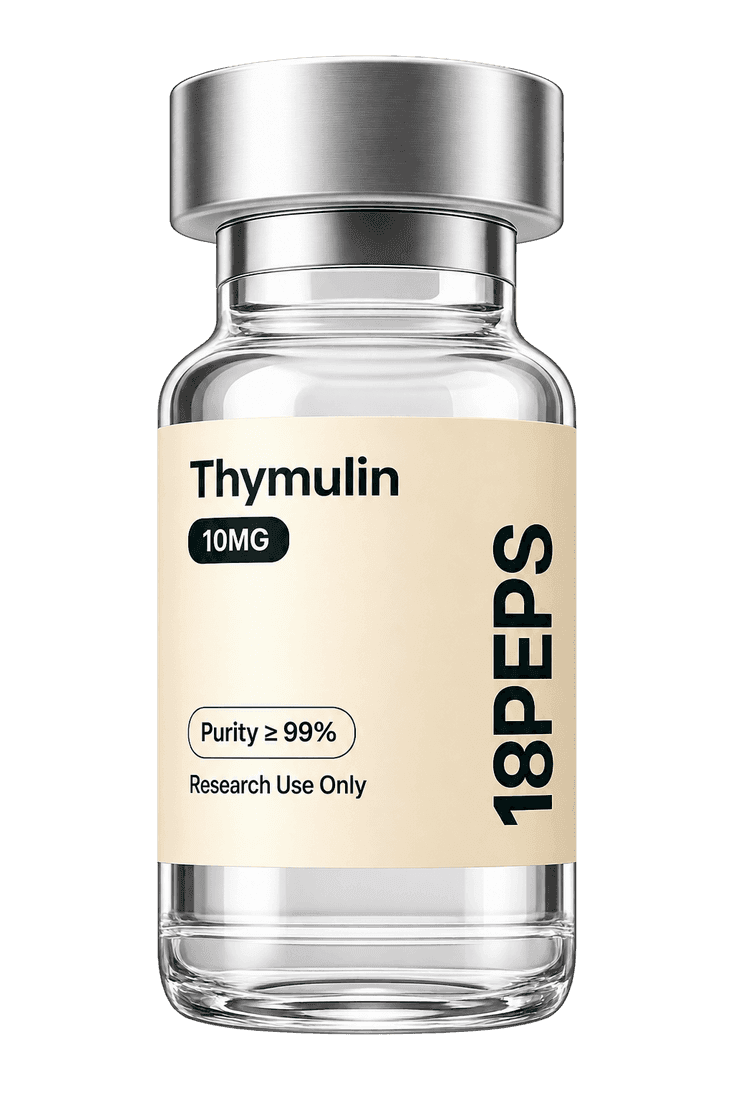
An endogenous nonapeptide hormone produced by thymic epithelial cells, biologically active only when coordinated to zinc. Formerly called serum thymic factor (FTS). Studied in T-cell differentiation, neuroendocrine-immune signalling and inflammatory cell models.
Thymulin is a nonapeptide hormone of thymic epithelial cell origin, sequence pGlu-Ala-Lys-Ser-Gln-Gly-Gly-Ser-Asn, with an N-terminal pyroglutamate and a free C-terminal carboxyl. PubChem CID 71300623 records the metal-free peptide as C33H54N12O15, 858.9 g/mol, under CAS 78922-62-0, and its IUPAC name independently confirms the residue order. Unlike the other entries in this group it is not a Khavinson bioregulator and has an entirely separate provenance: it was characterised in France by Bach and Dardenne as facteur thymique serique, and "FTS" in the older literature denotes the zinc-free apopeptide (see PMID 2189748, which describes FTS explicitly as "zinc-free thymulin"). The distinction is chemical, not semantic — thymulin proper is the zinc complex.
Zinc coordination is the defining structural feature. The 2004 Peptides review "Thymulin and the neuroendocrine system" describes it as a thymic hormone exclusively produced by thymic epithelial cells, consisting of a nonapeptide component coupled to the zinc ion, which confers biological activity (PMID 15003367). Study systems in the indexed literature include T-cell differentiation assays, hypothalamic-pituitary-thymic axis work, gonadotropin-releasing activity in pituitary cell preparations across age (PMID 10811143), and endotoxin-stimulated alveolar epithelial cells, where thymulin and zinc were examined against proinflammatory cytokine production, cAMP-dependent signalling and NF-kB nuclear translocation (PMID 19850345).
On the evidence base: thymulin differs from the rest of this group in that it is a mainstream immunology subject with a large multi-national literature going back to the 1970s, including substantial independent replication of its existence, zinc dependence and thymic origin. What it does not have is a therapeutic track record. No thymulin product holds a marketing authorisation in any jurisdiction I could verify, contemporary work remains preclinical, and analytical handling is non-trivial because the zinc-free and zinc-bound forms are distinct species with different activity. Material supplied as "thymulin" is in practice usually the synthetic apopeptide.
Specification
| CAS number | 78922-62-0 |
|---|---|
| Molecular formula | C33H54N12O15 |
| Molecular weight | 858.9 g/mol (metal-free nonapeptide; the biologically active zinc-bound form is heavier) |
| Sequence | pGlu-Ala-Lys-Ser-Gln-Gly-Gly-Ser-Asn (Glp-AKSQGGSN), free acid, all L-configuration; biological activity requires a coordinated Zn(2+) ion |
| Appearance | Lyophilised white powder |
| Storage | Store at -20°C, protect from light |
Batch records & certificates
Every lot we hold of this compound, across all warehouses. The certificate is tied to that lot number — not a generic sample document.
| Lot | Warehouse | Purity | Tested | Laboratory | Documents |
|---|---|---|---|---|---|
| THY20-021326 | All warehouses | 99.4% | 19 Feb 2026 | Analytical Formulations Inc. | COA |