DSIP (Delta Sleep-Inducing Peptide)
Nonapeptide isolated from rabbit cerebral venous blood in 1974; INN emideltide
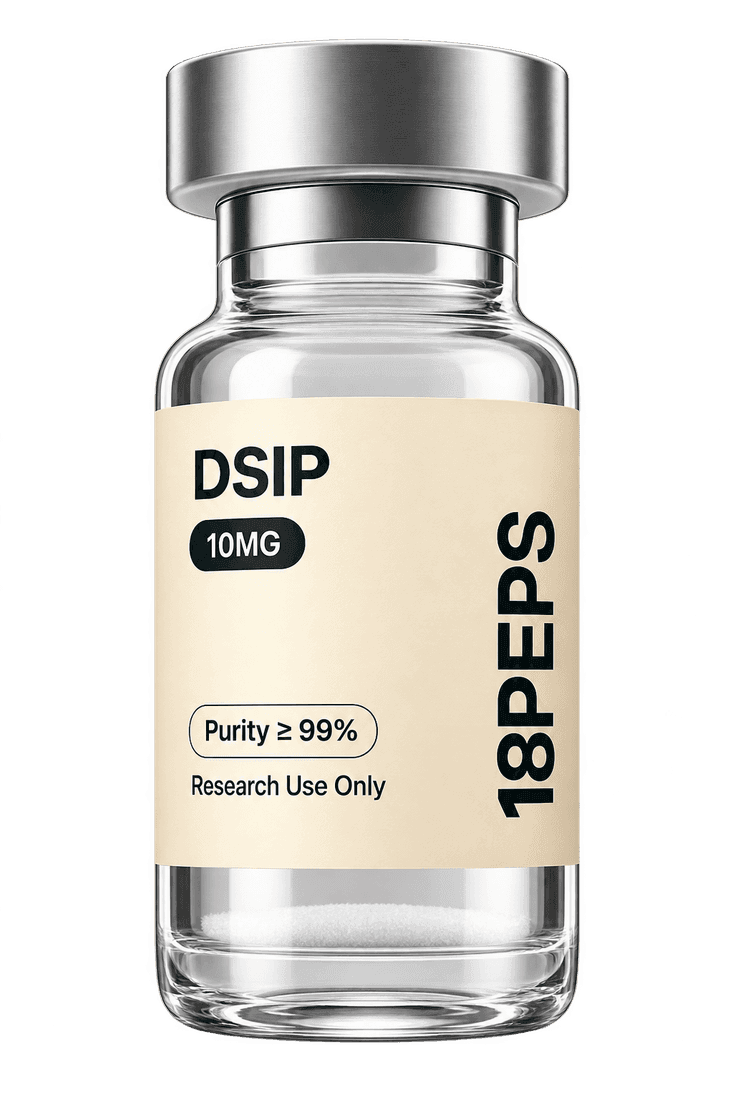
A nonapeptide (Trp-Ala-Gly-Gly-Asp-Ala-Ser-Gly-Glu) isolated in 1974 from rabbit cerebral venous blood during induced sleep. Holds the INN emideltide but is unapproved everywhere. Studied in sleep EEG, stress and withdrawal models, mostly pre-1995.
Delta sleep-inducing peptide is a nonapeptide with the sequence Trp-Ala-Gly-Gly-Asp-Ala-Ser-Gly-Glu. It was isolated in 1974 by the Schoenenberger and Monnier group in Switzerland from the cerebral venous blood of rabbits in which delta-wave sleep had been induced by electrical stimulation, and it is named after that bioassay rather than after any established physiological role. It holds the International Nonproprietary Name emideltide. Structurally it is unusually plain for a neuropeptide: the N-terminal tryptophan is its only aromatic residue, it contains no cysteine and therefore no disulfide, and the aspartate, glutamate and serine residues make it highly polar and short-lived in plasma.
DSIP has been examined in sleep electroencephalography in rabbits, rats, cats and humans; in stress and thermoregulation models; in opioid and alcohol withdrawal paradigms; in chronic pain; and for effects on corticotropin and somatotropin secretion. A smaller Russian and Eastern European literature has looked at antioxidant and geroprotective endpoints in rodents. The great majority of this work was published between the mid-1970s and the mid-1990s, and the field has been largely quiet since.
DSIP is a case where a long history has not produced a settled picture, and the catalogue should say so. No receptor for it has been identified, no precursor gene or biosynthetic pathway has been established, and its status as a genuine endogenous mammalian peptide has been questioned in the literature. The sleep-promoting effect that gave the peptide its name was not consistently reproduced in later studies, including in humans, with several groups reporting null results. The individual studies are small and old, preparations and methods varied between laboratories, and despite holding an INN it has never been approved by any regulator. It is best regarded as a historically important but unresolved research compound rather than a characterised one.
Specification
| CAS number | 62568-57-4 |
|---|---|
| Molecular formula | C35H48N10O15 |
| Molecular weight | 848.8 g/mol |
| Sequence | H-Trp-Ala-Gly-Gly-Asp-Ala-Ser-Gly-Glu-OH (WAGGDASGE) |
| Appearance | Lyophilised white powder |
| Storage | Store at -20°C, protect from light |
Batch records & certificates
Every lot we hold of this compound, across all warehouses. The certificate is tied to that lot number — not a generic sample document.
| Lot | Warehouse | Purity | Tested | Laboratory | Documents |
|---|---|---|---|---|---|
| DS10-021326 | All warehouses | 99.2% | 19 Feb 2026 | Analytical Formulations Inc. | COA |